A production-management guide for decorated apparel shops navigating August 2026
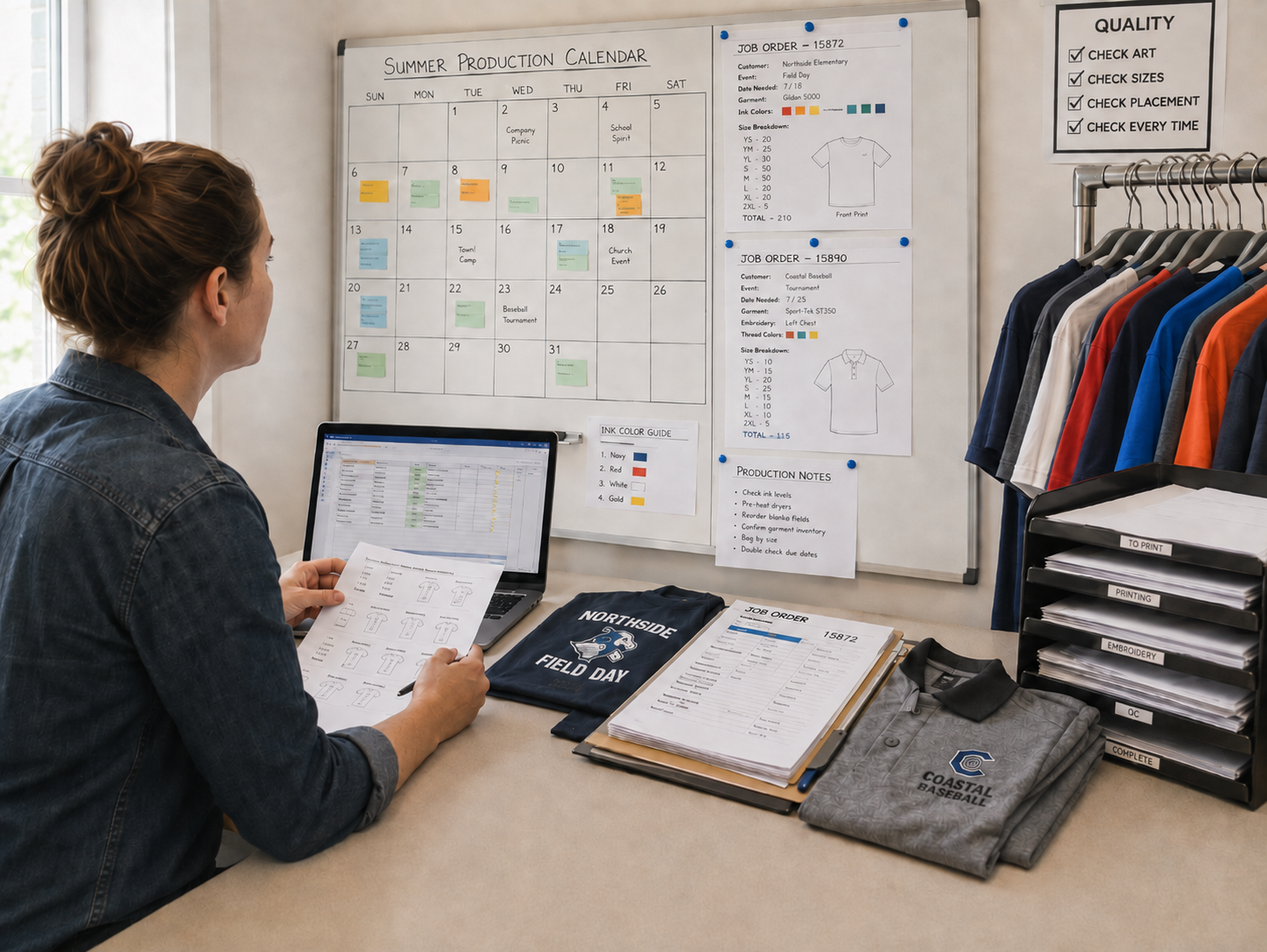
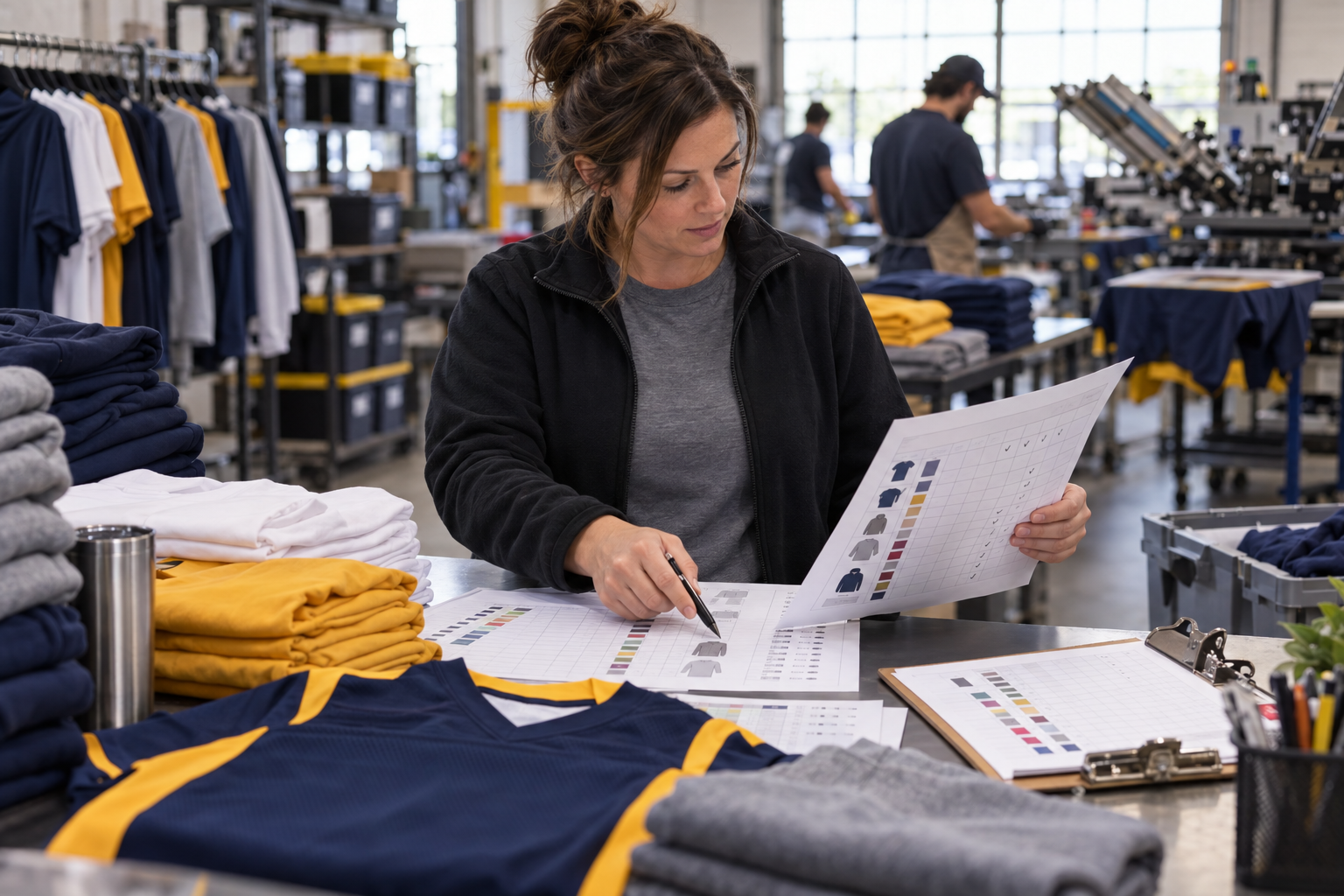
Back-to-school orders don’t always look like the largest jobs on the production board. One school may need 60 spirit shirts split across youth and adult sizes. A fall team may need names, numbers, and multiple garment colors. A student organization may add hoodies after its original T-shirt order is already approved. The piece count can be modest while the number of decisions, SKUs, and possible mistakes keeps climbing.
That combination is what makes August such a demanding production month. Peak demand now arrives as a larger mix of shorter, more customized jobs. The old assumption that busy season mainly means long, predictable runs no longer fits.
For shop leaders, the question isn’t simply whether the presses can handle the volume, it’s whether sales, art, purchasing, scheduling, production, and fulfillment can stay aligned when every job carries a different size breakdown, approval status, decoration method, and fixed in-hand date.
Why is back-to-school season particularly challenging for decorated apparel shops?
Back-to-school season is difficult because seasonal demand lands inside a compressed, date-driven calendar while jobs are becoming more varied and less standardized. Four operating realities matter most:
- Back-to-school is one of the two busiest production windows of the year for decorated apparel shops, alongside the Q4 holiday and trade-show rush.
- Standard screen-printing production times in 2026 commonly run 7 to 10 business days after art approval, leaving little margin for scheduling errors during August’s compressed timeline.
- A 2026 industry trend shows orders getting shorter and more customized rather than simply higher in volume, meaning shops handle more SKU complexity per job during back-to-school season.
- Size matrix tools built into production management software such as ShopWorks OnSite can reduce manual data-entry errors on multi-size apparel orders common in school and team accounts.
What Makes Back-to-School Orders Different from Summer Volume
A general summer rush is largely a capacity problem: more jobs, more garments, and more pressure on available labor and equipment. Back-to-school work adds a second layer. The shop must manage variety at speed.
Short runs can still create long order details
A 48-piece order may include five adult sizes, three youth sizes, two garment colors, and a handful of personalized pieces. The production quantity is short, but the order structure is not. Every extra variation creates another point where sales information can be entered incorrectly, a garment can be ordered in the wrong size, or the production team can work from an outdated note.
Size matrices are operational data, not clerical detail
For school and team accounts, the size breakdown controls purchasing, picking, decoration, quality checks, packaging, and delivery. When sizes are scattered across separate spreadsheet rows, emails, or handwritten changes, employees must repeatedly interpret the order. A clean size matrix gives the shop one structured view of quantities across sizes and helps make the job easier to check at each handoff.
The event date doesn’t move with the schedule
The first game, orientation, club fair, fundraiser, or spirit day is fixed. A job that loses two days waiting on a proof does not gain those days back later. That’s why the customer due date, internal completion target, art-approval deadline, and production start should be treated as separate milestones rather than one date typed into a calendar.
Late additions are part of the pattern
School accounts routinely surface new information after the initial order: a coach adds a player, a club gains members, or an administrator changes a garment color. Shops need a defined rule for changes after approval. Otherwise, one small addition can quietly trigger a new purchase, a revised proof, a production interruption, and a packing exception.
The 7-to-10-Day Window Starts After Approval
Published screen-printing turnaround guidance commonly cites a standard production window of about 7 to 10 business days. The important operational detail is when that clock begins. Providers typically tie production time to approved artwork or mockups, finalized order details, garment availability, and payment. In other words, a quote is not a production-ready job.
During decorated apparel shop August production, unapproved work shouldn’t occupy the schedule as if it’s ready. Production managers need to see which orders are approved, which garments have arrived, which jobs are waiting on customer action, and which due dates are at risk. Treating every open order as equally ready creates a schedule that looks full, but cannot actually run.
How Production Management Software Handles Short-Run Complexity
For back-to-school screen printing, order management software is most valuable when it turns all those moving details into structured, usable production information. The goal isn’t to add a dashboard for its own sake; it’s to help each department work from the same order without retyping or reinterpreting it.
Enter multi-size orders as a matrix
ShopWorks OnSite allows users to enter different sizes on a single line item and define whether the matrix is used for each order. That matters for a spirit-wear or team order because the user can see the entire size run together instead of creating a separate line for every size. Faster entry is helpful, but the larger benefit is consistency: a cleaner order is easier for purchasing, production, and final quality control to read.
Build schedules around actual shop capacity
OnSite can schedule jobs based on a shop’s setup and production types, with schedules available by department or machine. That gives production managers a more practical way to place short-run jobs alongside larger work. A 36-piece personalized team order may require less press time than a 500-piece run, but it may demand more art, sorting, and finishing attention. The schedule should reflect the whole route through the shop.
Connect art status with production readiness
OnSite is designed to manage designs and artwork as part of the production process, and it integrates with the ProofStuff add-on for online approvals. Keeping art status, order details, size matrices, and production notes connected reduces the chance that one department works from an older version. It also makes a late approval visible as a scheduling issue instead of a surprise discovered on the floor.
Make repeat orders easier to reproduce
School programs recur. Teams reorder, clubs return, and annual events come back with small changes. OnSite can store production details and recall them for future runs, giving the shop a more reliable starting point than searching email or rebuilding an old job from memory. That’s especially useful when the reorder is smaller, more urgent, or needed after the main season has begun.
An August Production Readiness Check
Before the back-to-school queue peaks, confirm that your workflow can answer these questions without a meeting or a hunt through email:
- Is every order tied to an in-hand date, an internal completion date, and an approval cutoff?
- Can sales enter youth and adult sizes, colors, styles, and personalized items in one structured order?
- Can the production manager separate approved jobs from orders still waiting on art, garments, or payment?
- Can schedules be viewed by department or machine so bottlenecks are visible before a deadline slips?
- Does the shop have a clear rule for late additions and post-approval changes?
- Can the team retrieve prior school or team production details without rebuilding the job?
If the answer to several of these questions depends on one employee’s memory, a shared spreadsheet, or a whiteboard that only the production floor can see, the problem isn’t effort—it’s workflow structure.
Is Your Shop Ready for the Second Rush?
Back-to-school production rewards shops that can absorb variation without losing control of the schedule. Short runs, complicated size matrices, personalized garments, and fixed event dates aren’t exceptions in August, they’re the work.
ShopWorks OnSite brings size matrix order entry, production details, artwork management, and scheduling into one connected system built for decorated apparel businesses. The best time to tighten August production is before the first late approval tests it. Request a personalized OnSite demo focused on size matrix management and production scheduling for short-run, multi-SKU school and team orders.